FIVE RETAIL TECHNOLOGY TRENDS THAT WILL SHAPE 2026
Retailers across Europe are pushing for leaner operations, sharper customer experiences and more flexible formats. The pace of change has picked up as supply chain pressures, labour shortages and shifting customer expectations converge. The next stage of retail modernisation will be defined by a clear set of themes: These five trends highlight where investment is heading and where retailers can expect the strongest impact, both in terms of opportunity and operational challenge.
FRICTIONLESS CHECKOUT: THE SPRINT TOWARD INVISIBLE PAYMENTS
Frictionless checkout is quickly moving beyond pilot stores. Retailers now look for scalable models that reduce queues without squeezing margins. Vision-based systems, smart baskets, mobile scan-and-go and hybrid self-checkouts are coming together into checkout ecosystems rather than isolated solutions.
The main driver is customer tolerance. Shoppers respond well to speed, but only if they trust the process and understand how they’re being charged. Retailers are working hard to strike this balance by blending automation with clear reassurance, like screens that show detected items, simple payment steps and staff who can intervene without breaking the flow.
The opportunity lies in reshaping staff roles. Fewer hours are tied to manned checkout operation, and more time can shift to service, merchandising or support for new digital touchpoints. The challenge is maintenance: sensors, vision systems and network performance need consistent tuning. Retailers entering this space should expect an optimisation journey, not a plug-and-play solution.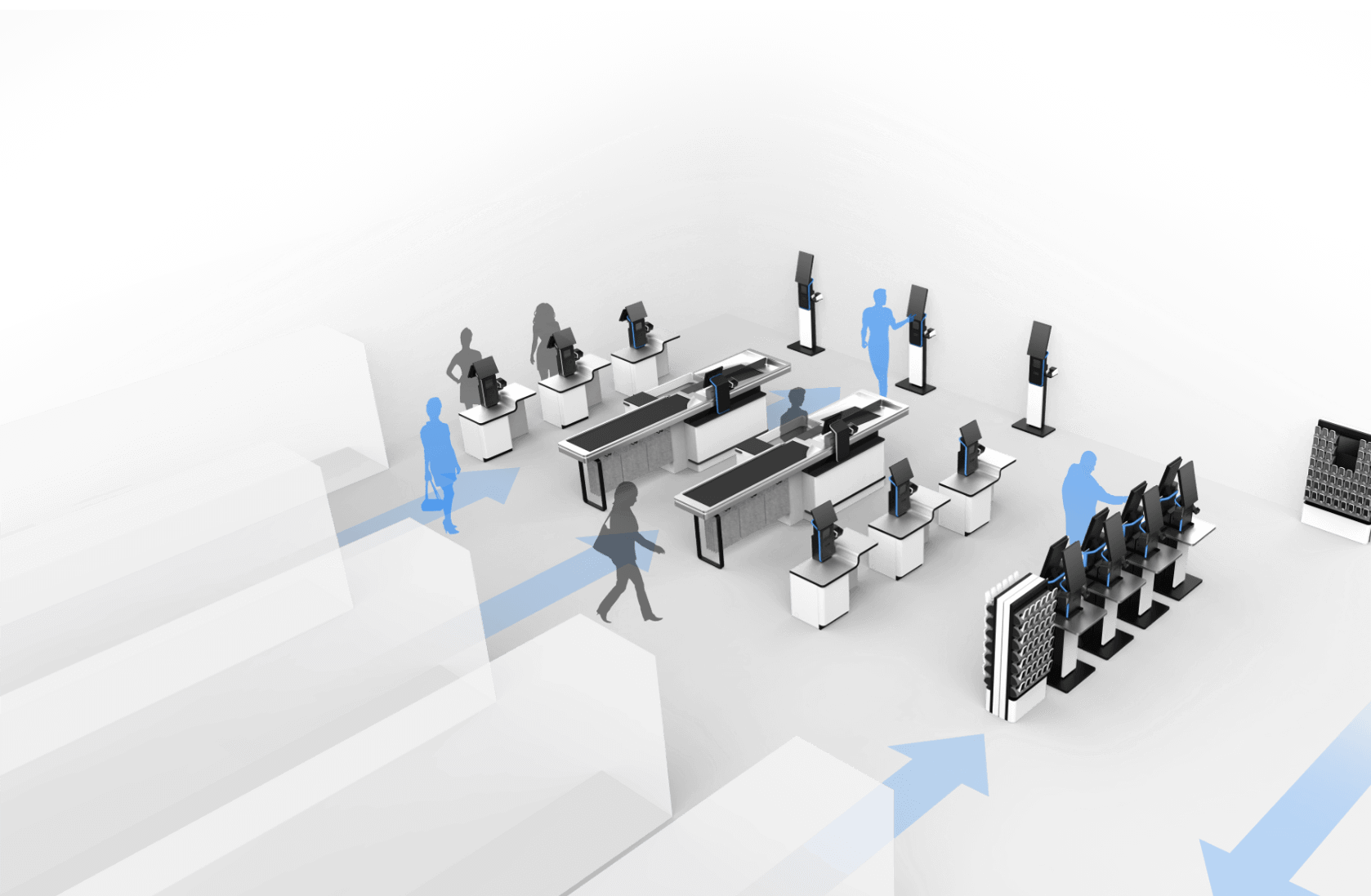
MODULAR STORE DESIGN: RETAIL SPACES BUILT TO ADAPT
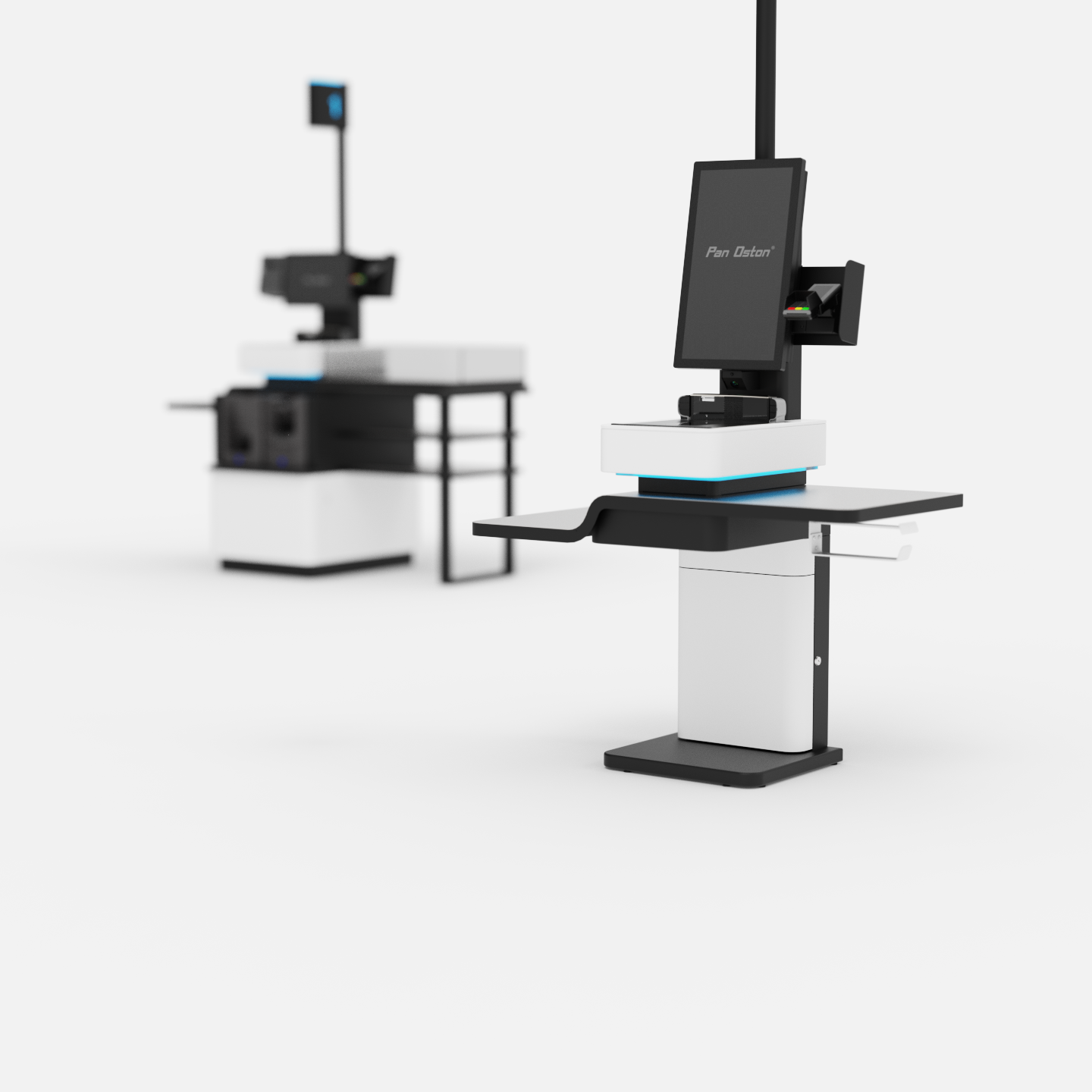
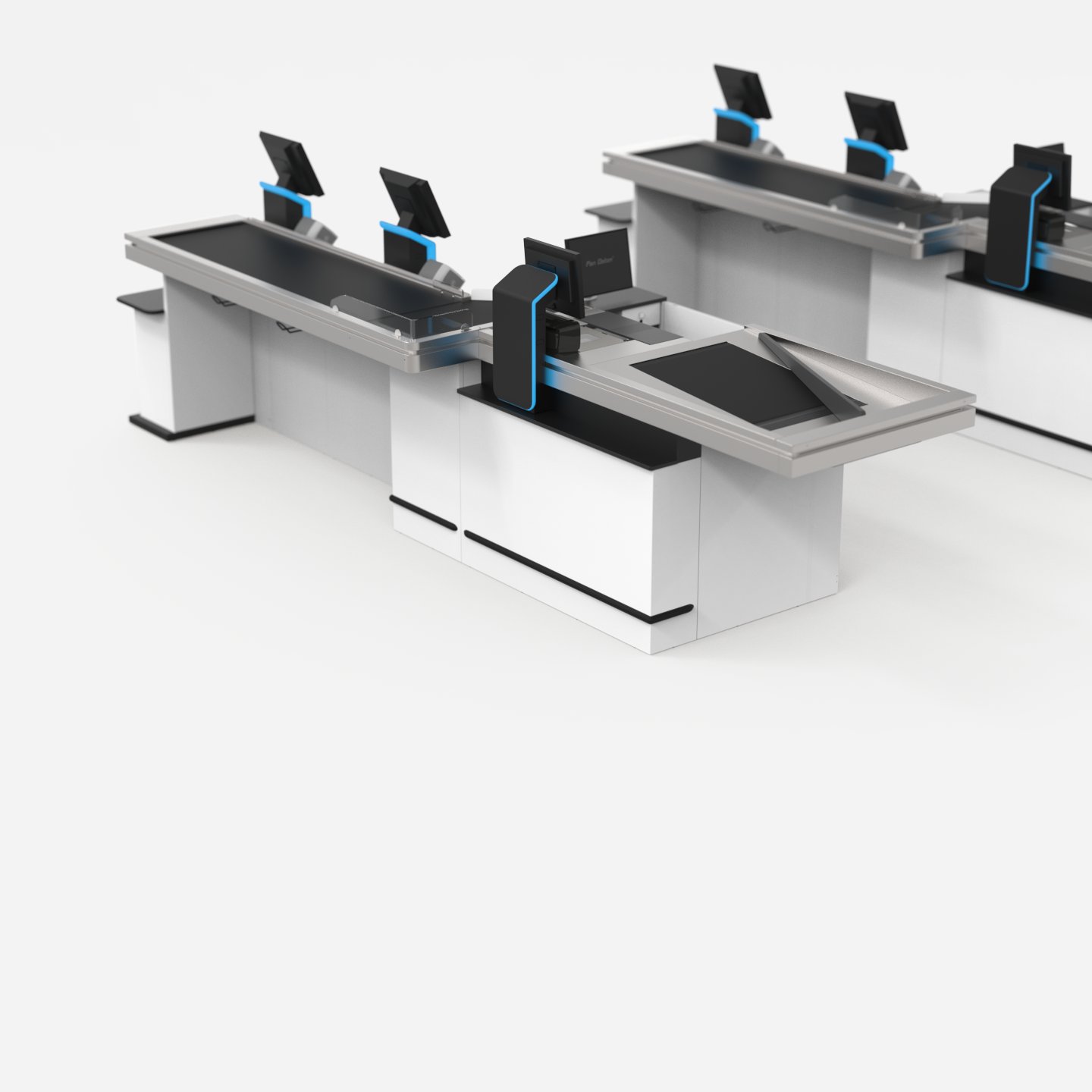
Where many retailers once redesigned stores every several years, modularity now enables continuous evolution. For checkouts, terminals and self-service units, it is therefore crucial that they are designed in such a way that hardware innovations can be integrated effortlessly so that they can be moved, adapted and renewed with minimal disruption. Sustainability goals also play a part in this, being able to easily refurbish and redeploy devices across locations reduces their environmental footprint. This approach supports everything from seasonal pop-ups to rapid trials of new services.
Modular self-checkouts and self-order terminals are proving especially valuable as retailers respond to shifts in labour availability and consumer behaviour. Being able to add units during seasonal peaks or reconfigure the checkout area for local needs improves both cost control and customer comfort.
The direction of travel points toward stores that behave more like flexible platforms. Power, connectivity, security and ergonomic considerations are being built into modular standards so retailers can test new layouts or service modes with much less risk. The challenge is the upfront planning: without cross-functional alignment, modularity can become an expensive mix of incompatible parts.
AI-DRIVEN POS: FROM TRANSACTION ENGINE TO INTELLIGENT HUB
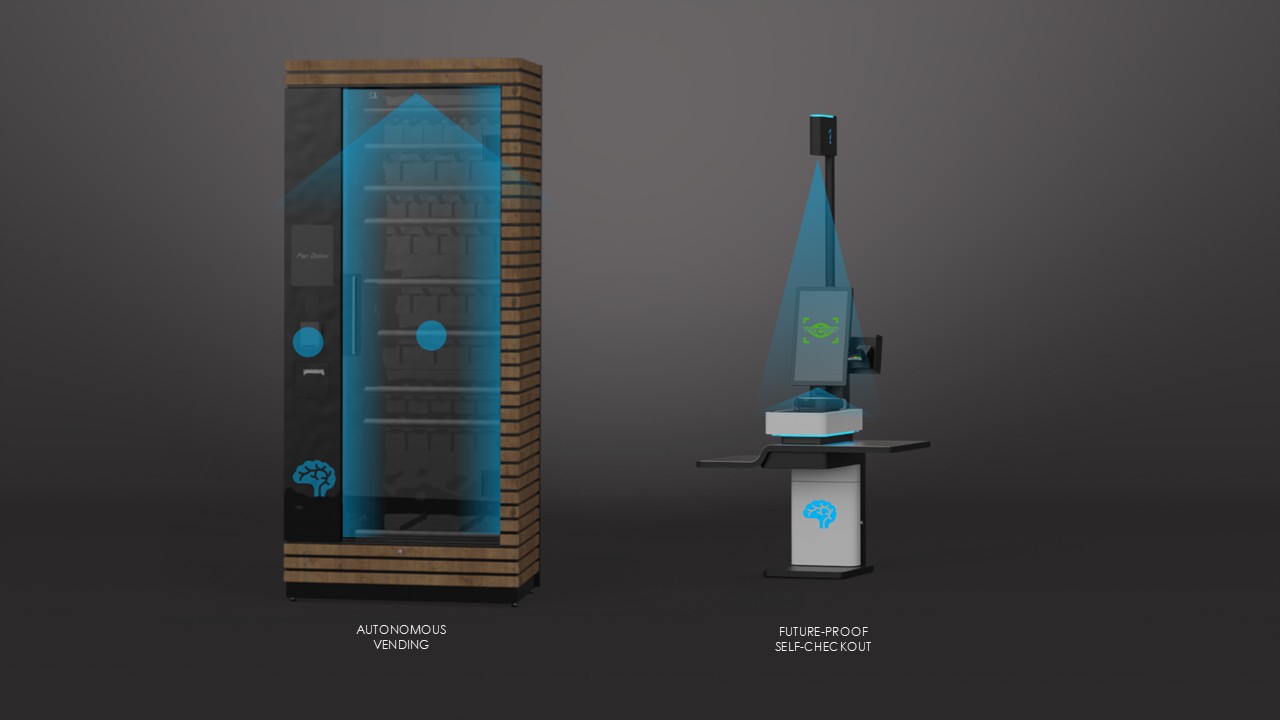
The point of sale is evolving from a payment touchpoint into a smart decision layer. AI is now featured in many POS platforms to support real-time stock insights, personalised promotions and predictive guidance for staff. Retailers are using AI-supported interfaces to speed up service during peaks, improve accuracy on weighted items and introduce proactive fraud detection that adapts to patterns rather than rules.
What’s changing fastest is the role of POS intelligence in bringing channel consistency. Staff-facing and customer-facing systems are beginning to share common AI models, making promotions, product data and service logic more consistent across checkout, self-checkout and mobile touchpoints. This shift is improving conversion, trimming wastage and offering retailers an easier route to omnichannel alignment.
Challenges remain in data quality, integration and interpreting AI outputs responsibly. Still, the retailers that invest early often achieve smoother operations and more confident decision-making at ground level. The POS is becoming an environment that learns day by day—not a static system receiving a quarterly update at best.
CONNECTED SERVICE ECOSYSTEMS: A SINGLE DIGITAL BACKBONE
Retail equipment is becoming part of a broader digital fabric, where POS, self-service, loyalty, pricing and replenishment systems share data in near real time. This trend is driven by rising expectations for unified experiences and by the need for leaner operations.
Retailers are investing in open APIs, modern middleware and cloud-native checkout platforms to achieve this. As systems connect more tightly, the role of each device becomes clearer. A self-checkout, for instance, is no longer a standalone unit but a service node that draws from the same data pool as the mobile app, kiosk or staffed POS. Crucial in this regard is that all these devices are software-agnostic, in order to be able to evolve with technical advancements.
This shift opens the door for rapid deployment of new features across the fleet—price changes, user interface updates, loss-prevention rules and loyalty mechanics can be rolled out widely with less effort. The challenge is governance. Data flow is powerful but can create technical debt without strong policies, clear ownership and stable partner collaboration.
AUTOMATED SERVICE EXPANSION: BEYOND CHECKOUT
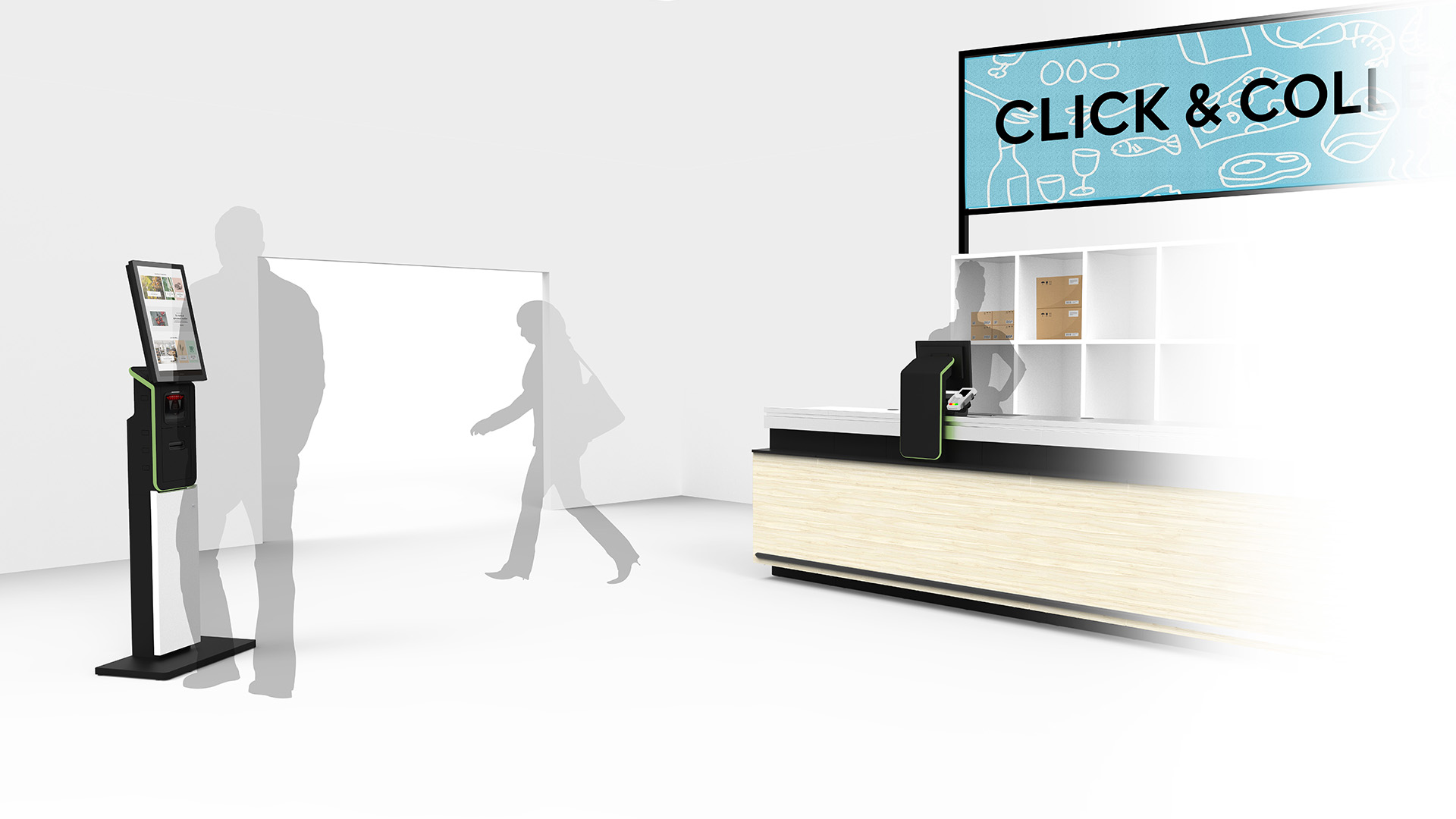
Retail automation is extending deeper into the store. Smart returns stations, automated click-and-collect lockers, AI-enabled customer-service kiosks and guided self-order points in prepared-food zones are gaining traction. The retailers adopting these tools are not chasing gadgets; they’re seeking to free staff from predictable tasks while improving consistency.
The maturity of computer vision, customer-recognition technologies and privacy-first biometric options supports this trend. Retailers are using automated services to reduce queueing for non-checkout tasks and to expand service hours without hiring extra staff.
The opportunity lies in boosting operational resilience. Stores can continue functioning during peak times or staff shortages, with self-service absorbing routine demand. A challenge remains in staff acceptance and training: automation works best when employees understand how it helps rather than replaces them. Clear communication and well-tested workflows are key to smooth adoption.
WHERE THESE TRENDS LEAD
Taken together, these five shifts signal a retail landscape where intelligence, automation and flexibility blend into everyday operations. Retailers aiming to stay competitive are moving toward store environments that sense what’s happening, react quickly and adapt to local needs without major rebuilds.
The strongest gains come from integrating these trends rather than treating them as stand-alone investments. AI-driven POS tied to frictionless and flexible checkout systems, all supported by modular store design and a connected service ecosystem, creates a retail model capable of evolving continuously. Automated services extend that resilience by smoothing out pressure points and eliminating bottlenecks.
For retailers, the next two years offer a rare chance to modernise while the technology is maturing and consumer expectations are still forming. The decisions taken now will shape store operations, labour models and customer experience for much longer than a single investment cycle.
.jpg)
.jpg)